Quick answer: fundamental analysis forex means studying economic data, central bank policy, and geopolitical events to judge a currency’s underlying strength — interest rate decisions, inflation, and employment data are the indicators that move markets most.
| Indicator | What it signals | Why it matters to forex |
|---|---|---|
| Interest rate decisions | Central bank policy direction | Widely considered the single biggest fundamental driver of currency value |
| Inflation (CPI) | Price pressure in the economy | Central banks set rates largely in response to it |
| Employment (e.g. NFP) | Labor market health | Weighed alongside inflation in policy decisions; often produces sharp short-term moves |
| GDP growth | Broad economic health | Shapes the longer-term backdrop for policy and currency strength |
What Is Fundamental Analysis Forex?
Fundamental analysis looks at the economic health and policy direction of a country to judge whether its currency is likely to strengthen or weaken over time. It’s the counterpart to technical analysis, which studies price charts and patterns directly rather than the economic forces behind them. Neither approach is complete on its own — fundamentals tend to explain the multi-week or multi-month direction of a currency, while technicals help with the timing of individual trades within that broader picture.
The Core Economic Indicators That Move Currencies
Interest Rate Decisions
Central bank interest rate policy is widely considered the single biggest fundamental driver of currency value. Higher interest rates tend to attract foreign capital seeking better returns on savings and bonds, which can increase demand for a currency; rate cuts tend to have the opposite effect. This is a general tendency shaped by many other factors at once, not a mechanical rule that plays out identically every time — but it’s the reason a scheduled central bank decision (from the Federal Reserve, European Central Bank, Bank of England, and others) is one of the most closely watched events on an economic calendar.
Inflation Data (CPI)
The Consumer Price Index measures how fast prices are rising across an economy. Inflation data matters to forex traders specifically because central banks set interest rate policy largely in response to it — persistently high inflation typically increases pressure on a central bank to raise rates (or hold off on cutting them), while low or falling inflation can open the door to rate cuts. Watching inflation data is, in practice, watching for early signals of where interest rate policy is headed next.
Employment Reports
Labor market data — most prominently the US Non-Farm Payrolls (NFP) report — gives a read on economic health that central banks weigh alongside inflation. A strong labor market can support a currency by signaling economic resilience and reducing pressure for rate cuts; a weakening labor market can do the opposite. NFP in particular is known for producing some of the sharpest short-term volatility of any scheduled release, since it lands once a month and often surprises relative to forecasts.
GDP Growth
Gross Domestic Product growth is a broader, slower-moving measure of economic health. It matters less for short-term price action than interest rate or employment data, but sustained GDP trends — an economy consistently growing faster or slower than its peers — shape the longer-term backdrop that central bank policy and currency strength sit within.
How to Read an Economic Calendar
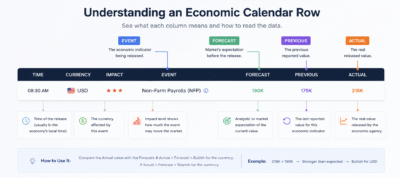
An economic calendar lists scheduled data releases and central bank events by date and time, usually with an indicated impact level (low, medium, high). A practical approach:
- Check the calendar at the start of each week to see which high-impact events are coming — interest rate decisions and NFP are typically flagged as the highest-impact events.
- Note the forecast, not just the event. Markets tend to react to the gap between the actual figure and what was expected, not the raw number in isolation — a “good” number that misses a high forecast can still move a currency down.
- Expect wider spreads and faster moves around high-impact releases, and size positions accordingly if trading through one.
Combining Fundamental Analysis With Technical Patterns
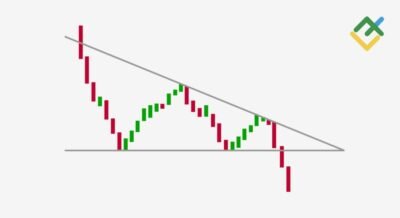
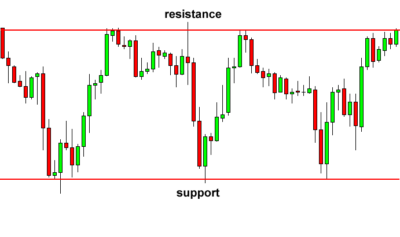
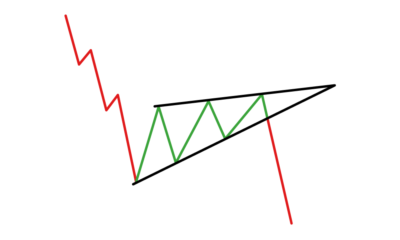
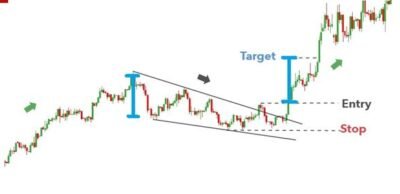
Fundamentals and technicals aren’t competing approaches — many traders use fundamentals to establish a directional bias and technicals to time the actual entry. If fundamental data supports a currency strengthening, a trader might then look for a technical setup — a confirmed head and shoulders reversal, a break of an ascending triangle, or a bounce from a double bottom — to time the entry within that broader fundamental direction, rather than trading the fundamental view in isolation.
A Historical Example: Why Rate Policy Matters This Much
One of the clearest historical illustrations of interest-rate policy’s pull on currency value is the US Federal Reserve’s rate-hiking campaign under chair Paul Volcker starting in 1979, which pushed rates toward 20% to combat runaway inflation. The US dollar strengthened significantly against major currencies through the early-to-mid 1980s during this period — though that move had multiple contributing causes beyond rate policy alone, including expansionary fiscal policy and safe-haven capital flows at the time. Still, the rate-differential effect described above is widely considered one of the significant forces behind that strengthening, which is why it’s a commonly cited example of the mechanism at scale. Modern rate cycles are smaller in magnitude, but the underlying mechanism — higher rates drawing in capital seeking better returns — is the same one driving currency moves around any current central bank decision.
Common Mistakes With Fundamental Analysis
- Trading the headline number without checking the forecast. An economic release that beats last month’s figure but misses expectations can still move a currency the “wrong” way.
- Ignoring which stage of the policy cycle a central bank is in. The same inflation data can mean different things depending on whether a central bank is currently focused on fighting inflation or supporting growth.
- Treating fundamental analysis as a precise timing tool. It’s better suited to establishing a directional view than to pinpointing exact entries — that’s what technical analysis is for.
Key Takeaways
- Fundamental analysis studies economic data and central bank policy to judge a currency’s underlying direction; technical analysis studies price charts to time entries within that direction.
- Interest rate decisions, inflation (CPI), and employment data (like NFP) are the indicators that move currencies most, because central bank policy responds to them directly.
- Check an economic calendar’s forecasts, not just the raw figures — markets react to surprises relative to expectations.
Frequently Asked Questions
What is fundamental analysis in forex?
Fundamental analysis is the study of economic data, central bank policy, and geopolitical events to judge a currency’s underlying value and likely direction, as opposed to technical analysis, which studies price charts directly.
Which economic indicators matter most for forex?
Interest rate decisions, inflation data (CPI), employment reports, and GDP growth are among the most closely watched, because central bank policy — which responds to these figures — is one of the biggest drivers of currency value over time.
Is fundamental analysis better than technical analysis?
Neither is inherently better — they answer different questions. Fundamental analysis helps explain why a currency might trend over weeks or months; technical analysis helps time entries and exits within that trend. Many traders use both together.
How do interest rates affect currency value?
Higher interest rates tend to attract foreign capital seeking better returns, which can increase demand for a currency; lower rates tend to have the opposite effect. This relationship is a general tendency shaped by many other factors, not a fixed rule that holds on every single day.